Author Archives: Peter

Star Trek, curiosity and exploration

I’m not the most avid Star Trek fan, but I remember watching The Next Generation when I was a kid. Some episodes really caught my imagination. There’s an episode where people from the 20th century wake up from cryogenic storage and are confused by the absence of money. After I read The Diamond Age I thought about that episode. Those are two very different views of post-scarcity.

If the Enterprise is a symbol of idealized science and exploration, what is the symbol of my worries about the scientific endeavor? I picture the Spaceballs flying Winnebago. Worn out, poorly maintained, and running out of gas. Why would it even run on gas? We don’t know, but here we are.

I avoid the news, but I hear that scientists are trying to get into politics. There’s even a Political Action Committee. It reminds me of the Schrodinger’s Cat Trilogy by Robert Anton Wilson:

The whole neurosociology of the twentieth century could be understood as a function of two variables—the upward-rising curve of the Revolution of Rising Expectations, and the downward-plunging trajectory of the Revolution of Lowered Expectations.
The Revolution of Rising Expectations, which had drawn more and more people into its Up-thrust during the first half of the century, had led many to believe that poverty and starvation and disease were all being phased out by advances in pure and applied science, growing stockpiles of surplus food in the advanced nations, accelerated medical progress, the spread of literacy and electronics, and the mounting sense that people had a right to demand a decent life for themselves and their children.
The Revolution of Lowered Expectations was based on the idea that there wasn’t enough energy to provide for the rising expectations of the masses. Year after year the message was broadcast: There Isn’t Enough. The masses were taught that Terra is a closed system, that entropy was increasing, that life was a losing proposition all round, and that majority were doomed to poverty, starvation, disease, misery and stupidity.
Most of the people who still had rising expectations were scientists.

Anything we can do to raise our expectations is good. There is enough: enough energy (solar and nuclear), enough medicine (the molecules are cheap), enough labor (robots!), enough fun stuff to do (digital entertainment is almost infinitely abundant). It might be that changing peoples’ expectations is as important as fulfilling them.

 

Slow progress on Raman Spectroscopy for Beer

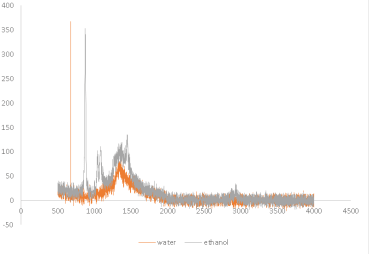
They make USB floppy drives. Who knew? I bought the Chuanganzhuo 3.5″ USB External Floppy Disk Drive from amazon and it did the job. I can get Raman spectra off the old instrument and into my laptop without a huge process involving another PC from 2001 and a second form of removable media. So that’s nice. And I got a spectrum of ethanol. So that’s progress, too:

2017-02-21 07_07_31-Book1 - Excel.png

Now that I have reference spectra, I can start building an instrument. This guy knows what’s up. Building optical instruments is fun.

The future of caring labor

Some of humans’ highest callings are “caring labor”. Caring for sick relatives and caring for children are mostly unpaid. Other kinds of caring labor are “merely” underpaid (think educators, nursing assistants). These jobs strike me as being the most resistant to automation. I think automation will lead to job losses in many other fields. I wonder how we could make the economy support these kinds of work more effectively. Bill Gates was on Quartz discussing this issue. He raised the possibility of taxing robots in order to fund more caring services.

I’m of the opinion that an automation tax is unnecessary and maybe counterproductive. I’m inclined to manage increases in economic production capacity by increasing the money supply. That may not be a popular opinion, but I’m not the only person thinking that way.

It almost doesn’t matter where the money comes from, though. We need to have a mechanism to pay people to take care of one another. We need that mechanism to put money in the hands of the consumer base to sustain economic demand. So whether that comes down to an expansion of social security or a universal basic income, it needs to happen. How we balance the books is somewhat arbitrary. People need to have a way to transition away from automatable jobs (which are never coming back)  into serving the actual needs of other humans.

I like the Raspberry Pi better than android mini PC

I have tried to use both the Raspberry Pi better than android mini PC. I wanted to use small embedded PCs to run little instruments in the lab. The Raspberry pi is my preferred option.android and mk809iv.pngIi has a good community of users, an easy to install linux OS on the microSD card, and more USB slots for things like the 3D printer. I used it with pronterface to print things and it worked out well.

The android miniPC (mk809IV) turned out to be a bit of a flop. It’s hard to install linux. The native OS it slow. It will install android apps like netflix, which is cool for a home entertainment scenario, but is really too slow even for that.

Entertainment value is easier to see than scientific value

I was thinking about the value of entertainment. Value is subjective. Someone got paid because Hanson’s 1997 album sold well. Someone got to put money in their retirement fund because that band was successful. There’s nothing wrong with acknowledging the value of pop culture.

Science happened in 1997 as well. The Clustal algorithm (or one iteration of it) was published in 1997. I was using the Clustal algorithm last week to look at my sequencing data.  The first humanized monoclonal antibody was FDA approved in 1997. Humanized antibodies have become a pretty big deal.

It’s interesting to compare those two cases: the algorithm is freely available; humanized monoclonal antibodies are rather expensive drugs. One has a clear price tag, but both have clear value. Indeed, the crustal algorithm (or some similar variant algorithm) was almost certainly used to process the data that ultimately led to some of those monoclonal antibody therapeutics.

So here we have three cases: a freely available algorithm, an expensive drug, and a very successful pop culture phenomenon (MMMBOP!) all debuted in 1997. Do they not all have value?

This all leads me to an argument for government-sponsored science. These three phenomena needed different funding mechanisms. Market-based funding worked for Hanson and for humanized monoclonal antibodies; it did not work for the Clustal algorithm. It would be very unfortunate to lose any of this value just because of a commitment to market-based funding.