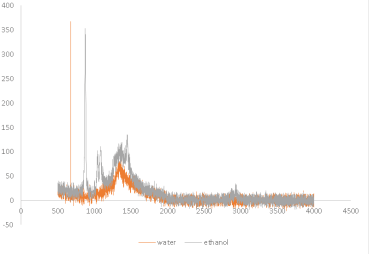
They make USB floppy drives. Who knew? I bought the Chuanganzhuo 3.5″ USB External Floppy Disk Drive from amazon and it did the job. I can get Raman spectra off the old instrument and into my laptop without a huge process involving another PC from 2001 and a second form of removable media. So that’s nice. And I got a spectrum of ethanol. So that’s progress, too:
Now that I have reference spectra, I can start building an instrument. This guy knows what’s up. Building optical instruments is fun.
Some of humans’ highest callings are “caring labor”. Caring for sick relatives and caring for children are mostly unpaid. Other kinds of caring labor are “merely” underpaid (think educators, nursing assistants). These jobs strike me as being the most resistant to automation. I think automation will lead to job losses in many other fields. I wonder how we could make the economy support these kinds of work more effectively. Bill Gates was on Quartz discussing this issue. He raised the possibility of taxing robots in order to fund more caring services.
I’m of the opinion that an automation tax is unnecessary and maybe counterproductive. I’m inclined to manage increases in economic production capacity by increasing the money supply. That may not be a popular opinion, but I’m not the only personthinking that way.
It almost doesn’t matter where the money comes from, though. We need to have a mechanism to pay people to take care of one another. We need that mechanism to put money in the hands of the consumer base to sustain economic demand. So whether that comes down to an expansion of social security or a universal basic income, it needs to happen. How we balance the books is somewhat arbitrary. People need to have a way to transition away from automatable jobs (which are never coming back) into serving the actual needs of other humans.
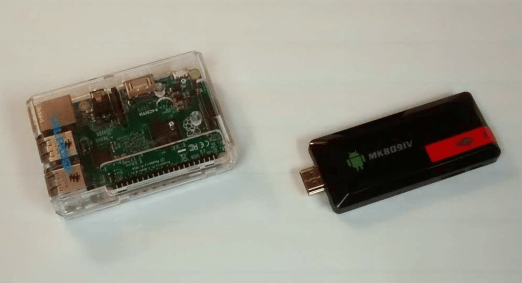
I have tried to use both the Raspberry Pi better than android mini PC. I wanted to use small embedded PCs to run little instruments in the lab. The Raspberry pi is my preferred option.Ii has a good community of users, an easy to install linux OS on the microSD card, and more USB slots for things like the 3D printer. I used it with pronterface to print things and it worked out well.
The android miniPC (mk809IV) turned out to be a bit of a flop. It’s hard to install linux. The native OS it slow. It will install android apps like netflix, which is cool for a home entertainment scenario, but is really too slow even for that.
I was thinking about the value of entertainment. Value is subjective. Someone got paid because Hanson’s 1997 album sold well. Someone got to put money in their retirement fund because that band was successful. There’s nothing wrong with acknowledging the value of pop culture.
Science happened in 1997 as well. The Clustal algorithm (or one iteration of it) was published in 1997. I was using the Clustal algorithm last week to look at my sequencing data. The first humanized monoclonal antibody was FDA approved in 1997. Humanized antibodies have become a pretty big deal.
It’s interesting to compare those two cases: the algorithm is freely available; humanized monoclonal antibodies are rather expensive drugs. One has a clear price tag, but both have clear value. Indeed, the crustal algorithm (or some similar variant algorithm) was almost certainly used to process the data that ultimately led to some of those monoclonal antibody therapeutics.
So here we have three cases: a freely available algorithm, an expensive drug, and a very successful pop culture phenomenon (MMMBOP!) all debuted in 1997. Do they not all have value?
This all leads me to an argument for government-sponsored science. These three phenomena needed different funding mechanisms. Market-based funding worked for Hanson and for humanized monoclonal antibodies; it did not work for the Clustal algorithm. It would be very unfortunate to lose any of this value just because of a commitment to market-based funding.
A new paper in the IEEE MEMS Journal talks about a single chip atomic force microscope. Typical atomic force microscopes run anywhere from $10k to $200k. Atomic force microscopes are very expensive because they require complex alignment of an extremely small pointed object (like a little miniature stylus) to the thing you’re trying to take a picture of. They work by scanning that sharp tip across the object like someone reading braille. The result is that you get a picture of that object that is not limited by the wavelength of light (it’s hard to take pictures of things that are smaller than the light itself).
Anyway, if you can make an atomic force microscope on a single chip, you don’t have to align anything. It just is all built into the same precisely manufactured device. It might be perfect for looking at DNA nanotechnology. I wonder if it would be possible to integrate that with a optical microscope and maybe a laser trap. That would be really good for looking at cells. Or even microparticles like I like to make. It’s probably not going to be good enough to look at single organic molecules (as cool as that is).

 Ii has a good community of users, an easy to install linux OS on the microSD card, and more USB slots for things like the 3D printer. I used it with
  Dr. Peter B Allen - Lab Blog
You must be logged in to post a comment.