Laser cut optical filter adapter

I bought an overstock optical filter for the lab’s plate reader (Beckman DTX-880). I want to analyze Hoechst dye fluorescence (excitation 350 nm, emission 453 nm). My new filter is the right size for the excitation filter slider, but too small for the emission filter slider. That’s probably because the 450 nm – 480 nm is a  very common excitation size but not a common emission size.

2016-11-07-05_32_59-krita

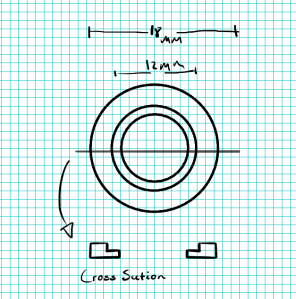
So, I need to either order another emission filter and custom size it to 18 mm diameter ($500) or I need to cut a little filter adapter ($free). I need something that will hold the 12 mm filter securely and block light. I envisioned something like this made from black plastic:

2016-11-07-05_37_50-krita

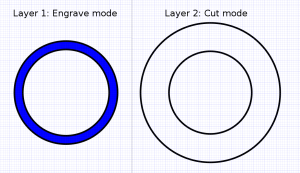
So I drew up 2 layers in Inkskape. The first layer made a partial engrave of a “rim” about 1mm into the 2mm thick plastic. The second layer cut the hole for the filter and then cut the part out of the plastic sheet:

2016-11-07-05_49_40-_filter-adapter-layerThe end result worked out pretty well. 2016-11-07-05_48_07-xnview-img_1590-jpgThe funny thing is that this laser cutter cost ~$300. So it has paid for itself already. Admittedly, it did take some troubleshooting… so maybe the cost benefit was not quite so clean. I had to replace the laser tube (which the company did supply) and I had to replace the power supply ($100). At this point I still call it a win.

Solar storage grid parity

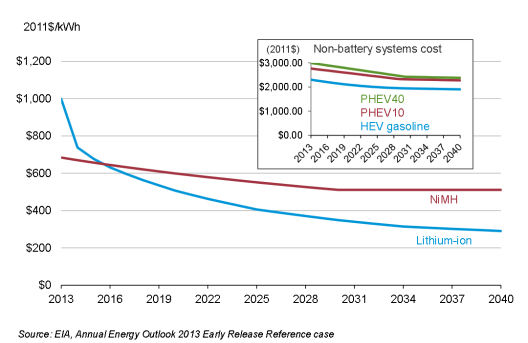
There are plenty of places where rooftop solar is at grid parity. We are approaching a time when stored solar electricity will be the cheapest power available even at night. Back in 2012, I estimated the battery price that would allow 24/7 solar to be as cheap as coal/nuclear electricity. I figured that stored solar would be in range of grid parity when batteries were ~$250 per kWh. In 2013, the EIA estimated that we would reach that price point in 2040.

2016-09-13 06_33_01-Annual Energy Outlook 2013 Early Release Reference Case - maples.pdf.png

The future is here early. Tesla and GM/LG are quoting prices from $140 to $190 per kWh. I suspect that if we tried to roll out a lot of grid-scale batteries, the additional demand would drive up the price (if only due to lithium supply problems). That being said, if you can do it with lithium, it’s doable with other chemistry. The constraints for stationary grid batteries are different than for vehicle batteries. Size and mass are less critical than price, for instance.

When long term energy scarcity is not a problem, I feel pretty optimistic about a lot of things.

Open Source Scientific Hardware

I love the idea of using open source hardware for laboratories. As someone who likes to tinker with his instruments, open source makes a lot of sense. If I build a spectrophotometer from parts, and all of the parts are well documented, I can make modifications and repairs more easily. It also makes sense from a monetary standpoint: I don’t have to pay for lots of support and infrastructure that I don’t want or need.

That being said,  there are some disadvantages:  there is no service contract associated with an open source instrument. If I buy something and I don’t know how to use it or repair it and it breaks, then I am simply out of luck.

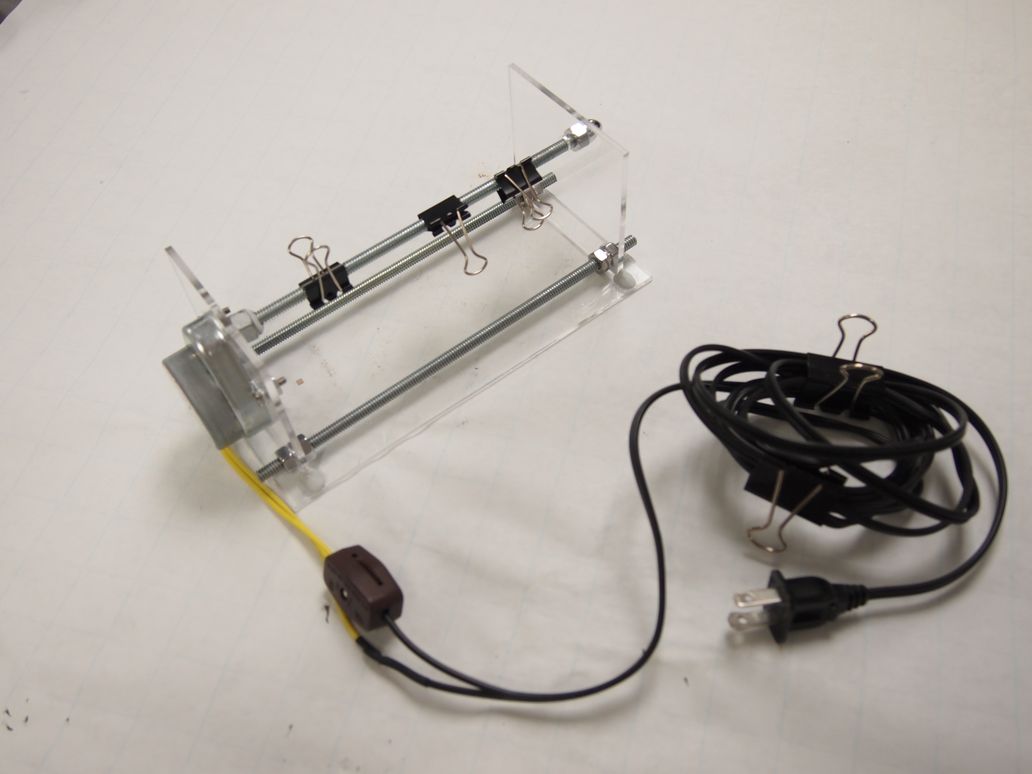
For now it makes the most sense to build simple instruments. I made an Open Source sample rotator for biology/chemistry laboratories. A new rotator for slowly stirring a solution during a reaction can be $300+ (Thermo wants you to request a quote!). I built one for about $50. The whole thing makes one rotation every 10 seconds. I secure vials to the rotating threaded rod using binder clips and/or tape.

OLYMPUS DIGITAL CAMERAIt works about as well as could be desired for a simple tool. There are lots of other examples. I published a short collection of others I made in the Journal of Biological Methods. There are some other great projects out there. One of my favorites is explained in a paper from the Pearce Lab at MTU. It was published in the Journal of Lab Automation. It talks about an open source liquid handling platform. The robots I had access to back in the day were just too intimidating – they were expensive and had a very steep learning curve. These will have a learning curve at first, but might at least be cheap.

Here are some other places that cover open source hardware:


Rotator Build notes:

I ordered the two square pieces and one rectangular piece of acrylic custom laser cut with appropriate holes from ponoko.com (CAD files are also available for cutting or downloading for modification). I also used one piece of threaded rod (.25 inch diameter, 20 threads per inch pitch) from the local hardware store. I cut that into three sections and used 9 nuts and 1 cap nut to secure it to the device. A attached the motor to the acrylic with two small machine screws I found in the lab. I locked the contact point between threaded rod and motor with epoxy paste. I solvent-welded the joints between the rectangle and squares with methylene chloride. I used a little bit of epoxy paste to reinforce the solvent-welded joints.

The switch, motor, and power cord were all ordered from McMaster Carr:

3867K12 Constant-Speed AC Gearmotor 6 rpm At 60 Hz  $23.57

14695K91 Inline on/Off Switch for Lamp  $ 2.64

7248K22 Power Cord with Two-Blade Plug 18 Gauge Wire, 9′ Long  $3.02

6 Month Review of the Scrum Method

The Allen Lab has using the Scrum method for 6 months. It is been remarkably productive. With two graduate students and three undergrads, we produced the data for two papers. One paper was submitted and provisionally accepted. The other is in preparation. We also produced a grant application.

The Allen Lab Scrum BoradThe Allen Lab Scrum Board

I give a lot of the credit for this to the Scrum method. I am new to lab management. My graduate students are very young and my undergraduates are just getting started. They have done amazingly and deserve the rest of the credit. I was not as productive in graduate school or in my postdoctoral work. I produced one paper per year (which is not bad) but this has been eye-opening.

It’s actually very difficult not to try to “convert” people. I feel almost like Scrum is a religion or something. I keep thinking about promoting this to other people in the department. I really don’t think that’s appropriate, so I keep my mouth shut. I’m the new kid and I am not a management consultant by any means. Every lab is different. I recognize all of this. Even so, I rather wish that I had trained in Scrum when I was a graduate student.

Maybe it would not have made much of a difference: there wasn’t a lot of “team science” when I was in graduate school. I don’t know if that’s a good thing or not. Maybe graduate students need more practice in team management. On the other hand, maybe it’s better to learn to do everything yourself. I don’t have a good answer for that, but I know what’s productive in my lab.

Scrum for Science

I’ve started reading the Scrum: the Art of Doing Twice the Work in Half the Time. It has inspired me to attempt to use some agile development/Scrum principles in working on my lab’s current manuscript. I think it is working pretty well. We have the first figure and many of the first set of experiments. It’s a little bit tough to think about unpredictable changes in experiments designed to cope with the reality of experimental failure. Probably the most important aspects of the scrum cycle are its ability to cut down on procrastination and the flexibility it offers to a team of busy people with other obligations. My students are all involved in classes and have plenty of work without having to know lab. If they’re working together on a shared goals, they can make progress even though none of them have an extended chunk of time to spend dedicated to a particular experiment.

Let’s get down to brass tacks: how do we measure productivity and how good can we expect it to get?

In my experience, an ambitious but realistic goal in an analytical lab is to produce one paper per graduate student per year. If this method is as good as it claims, then we can produce four papers per graduate student per year. That would suggest that my lab should produce four papers this year and as many as eight papers next year (assuming that the Allen lab can get another grad student). Suddenly that seems wildly unrealistic. Is it? Certainly it would require some more editorial effort on the part of students.

I don’t know if it will ever get that good but I can already see that what would have been three very slow projects has become one very fast project using the approaches that this book has suggested.