Last year, when I taught instrumental analysis, I gave very conventional lectures. This year, I would like to try to build and simulate instruments instead of just talking about them. With that in mind, I bought a light box from amazon that I can use for several projects. I hope to build a spectrophotometer and a fluorimeter at least. Maybe I can also build some demonstration equipment for electrochemistry. Plus, this gives me the opportunity to teach simulation.
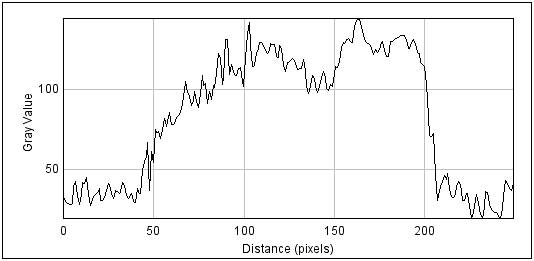
I made a short video about my first challenge to my students. I placed a diffraction grating in front of the light from a diffuser in front of a slit. The results was a nice rainbow. I used ImageJ to take a line scan. That’s one way to get to a spectrum.
The optical components need to be locked into place, the distance in pixels need to be calibrated to wavelength, and the sensitivity won’t ever be great, but I think it will be adequate to show some principles of spectroscopy. And it will definitely be adequate to show how light gets transformed to digital data and how that data can be processed.
I’ve been interested in earth abundant battery materials since I saw Sadoway’s TED talk. The idea is to start with the earth abundance of elements and choose something from the top.
In this graph (credit wikimedia), the elements in the upper left are the ones we want to focus on. These are elements that are easy to find. They are cheap as rocks. Because rocks are made of them. That’s what we want to make our battery out of.
These batteries will not be high performance. Think tractor not Tesla. When it comes to performance, lithium is great. It gives a lot of energy per unit mass (because it is light and reactive). Lithium is about 800 times less abundant than sodium. Sodium is heavier and less reactive so the performance is lower. Maybe sodium is ten times less useful as a battery. But if it’s 800 times cheaper, it still wins for applications where price is the bigger issue.
There’s a nice article about a new sodium metal battery technology in ACS Central Science. The article talks about making a better battery by suppressing dendrite formation. The battery has a sodium metal anode, a CPMEA polymer barrier to prevent dendrite formation, an ion-conductive NASICON ceramic separator, then a titanium phosphate/CPMEA polymer cathode that can absorb the sodium ions.
I had not read up on the NASICON ceramic sodium conductor before. It’s an interesting material in its own right. It has been studied since the 60s and is not too hard to prepare. I’m not sure I understand the need to add the ceramic membrane, though, since the CPMEA polymer may conduct sodium already? I would like to try making a suspension of NASICON powder in pre-polymer and then polymerizing it. I wonder if that would make a decent membrane. It might be easier to manufacture than a sintered disc? Maybe I’ll see if I can work with an inorganic chemist to try it.
If someone out there has some Na1+xZr2SixP3-xO12 they would like to share, I’ll make you a polymer membrane with it!
In Allen lab News, I was able to make some particles with my microfluidic droplet generator. Now, today, I’ll see if I can make them homogeneous.
They look like this. Not very homogeneous yet.
If you want to hear me yak about all of this, you can catch me on the youtube:
Scientific activism has had some amazing successes. Scientists have discovered a problem, lobbied for legal changes, and solved the problem. Example: there was an insecticide called DDT that bio-concentrated in birds. At low concentrations, DDT is not toxic to birds. But at high concentrations, DDT caused their egg shells to become very fragile and a great many birds died. Rachel Carson published a book called Silent Spring that exposed this phenomenon. Ultimately, this resulted in a ban on DDT. This allowed bird populations to recover. Another example is the chlorofluorocarbon (CFC) ban. In the upper atmosphere, CFCs degrade the ozone layer. A few scientists discovered this and lobbied to have CFCs replaced with less harmful chemicals. Once again, the ban was successful, ozone has started to recover.
When science discovers problems, we have become accustomed to scientists lobbying for the changes that they feel need to be made to address those problems. I’m not sure we should be totally comfortable with that. I understand that a scientist who discovers a terrible problem wants to help solve it. But I’m suggesting that scientists might be better off advocating for technological change rather than legal change.
For example, I’ve written here before that battery storage and solar electricity will probably replace coal. I don’t think that there is any need to ban coal. It will just happen because of economic necessity. Coal will get more expensive, solar electricity will get cheaper. As a scientist, I feel my time is better spent working on energy storage research as opposed to advocating a ban on carbon dioxide emissions.
We gave up DDT and chlorofluorocarbons in favor of other options that were less harmful. The chemists who invented the replacement chemicals are the unsung heroes of these environmental success stories.
I put up a little video today about the adenovirus that causes obesity. I think it’s interesting topic. The Allen lab has been working on Aptamers against viruses since last year. So maybe I have something to contribute to that. Last time I went after an obesity related topic, my grant application was rejected because I’m not a clinician and I’m not working with one.
I would really love to find a clinician with whom I could work on this or similar. Example: I would love to develop a sensitive, point-of-care virus assay that would tell a clinician if a person was currently infected with adenovirus-36. Maybe then we could screen for a before and after case where someone was not obese until they caught the virus. Then we could point to the actual event and then show that that person got fat afterward. It would be a vindication of the hypothesis that the virus actually causes obesity and is not merely associated with it. We can’t deliberately infect people with the virus, but we could catch them during the infection. I could develop the assay, but I can’t work with the patients.
I like working back from big problems to the sorts of projects that we could do in the Allen lab. I make a little mind map in the video. I’m not confident that that’s the best way to actually get funding, though. I suspect that to get a grant, I need to work through human connections and collaborations. “Who is an expert with whom I can work?” may be a more effective question than “What is an interesting problem?”
I designed a microfluidic based droplet generator based on a design from the Lee lab. After breaking my first one, I was able to get a chip secured to the scope. Nothing like spending an hour building something then dropping the keyboard on it. That’s fun.
In any case, I cut the device on the laser cutter, assembled it and ran oil and water through it. I don’t know if we will be able to make the particles at the size I want, but we can make monodisperse droplets and that’s the first step.




 Dr. Peter B Allen - Lab Blog

You must be logged in to post a comment.